My TWO-MONTH PEPTIDES UPDATE

My Peptide Update: Two Months In, Here’s What Actually Happened
When I first shared that I was starting peptides, I made one thing very clear: I wasn’t chasing a quick fix or aesthetic shortcut. My goals were simple and foundational—better metabolic health, long-term vitality, and graceful aging from the inside out.
Before anything was prescribed, my doctor—Dr. Gajer at The Gajer Practice in Burke and Vienna, VA—ran a full blood panel to assess my baseline. This step is critical and non-negotiable. Peptides (and hormones) should never be taken blindly.
That bloodwork revealed something unexpected: my testosterone was extremely low—barely registering.
For women, testosterone is not about “bulking” or masculinity. It plays a key role in:
Energy and motivation
Muscle maintenance
Metabolic health
Mood and cognitive sharpness
Dr. Gajer walked me through several possible reasons my testosterone could be suppressed. Despite my solid lifestyle—regular exercise, meditation, quality sleep—we suspected chronic stress was a major contributor. Even when you “do all the right things,” prolonged stress can quietly blunt hormone production.
So we addressed that first.
Month One: Testosterone + Selank + MOTS-C
Once testosterone was prescribed, we layered in two peptides for the first month: Selank and MOTS-C.
Selank: Stress Resilience & Nervous System Support
Selank is a peptide that supports the central nervous system, particularly stress regulation and anxiety reduction. For women in their 40s, this matters more than most people realize.
Benefits include:
Improved stress resilience
Enhanced mental clarity
Reduced anxiety without sedation
Support for mood balance
This peptide doesn’t force relaxation—it helps your nervous system remember how to regulate itself.
MOTS-C: Metabolic Efficiency at the Cellular Level
MOTS-C works at the mitochondrial level—essentially helping your cells use energy more efficiently.
Benefits include:
Improved insulin sensitivity
Enhanced fat oxidation
Increased energy availability
Support for metabolic flexibility
For women navigating hormonal shifts, this type of metabolic support is incredibly powerful.
A Surprising (and Refreshing) Lesson
One thing that surprised me: unlike Botox, peptides are not always “forever treatments.” Some peptides are used cyclically—one month on, then off—or only as needed, depending on your goals and response.
This felt aligned with my philosophy: support the body, don’t override it.
Lifestyle Still Did the Heavy Lifting
Peptides didn’t replace my habits—they amplified them. I cannot empathize this enough - you will only see results from peptides IF you are putting in the work. They are a multiplier, not a miracle. During this month I doubled down on:
A hard stop bedtime of 10:00pm
Drastically reducing alcohol
Daily meditation
Vibration plate sessions
Journaling and nervous-system regulation
The result? I felt incredible.
More energy, better focus, and—unexpectedly—my stomach felt noticeably tighter.
Month Two: Tesamorelin + GHK-Cu (Copper)
In month two, we transitioned to Tesamorelin and GHK-Cu, while continuing testosterone support.
Tesamorelin: Growth Hormone Support & Fat Metabolism
Tesamorelin stimulates the body’s natural production of growth hormone, which plays a role in:
Fat metabolism (especially visceral fat)
Muscle preservation
Cellular repair
Metabolic health
For women in midlife, declining growth hormone is a major—but often overlooked—factor in body composition changes.
My experience: bloating.
And I’ll be honest—I was not thrilled.
Dr. Gajer prescribed a very gentle water pill to help manage fluid retention. I hesitated. I wasn’t sure I wanted to take something just to tolerate something else. But we monitored it closely, and I stayed the course.
GHK-Cu: Tissue Repair, Skin & Anti-Aging
GHK-Cu (copper peptide) is best known for its role in:
Skin elasticity and collagen production
Tissue repair and healing
Anti-inflammatory support
Cellular regeneration
This peptide supports aging at the cellular and structural level—not just cosmetic changes.
The Results: Objective, Measurable, Undeniable
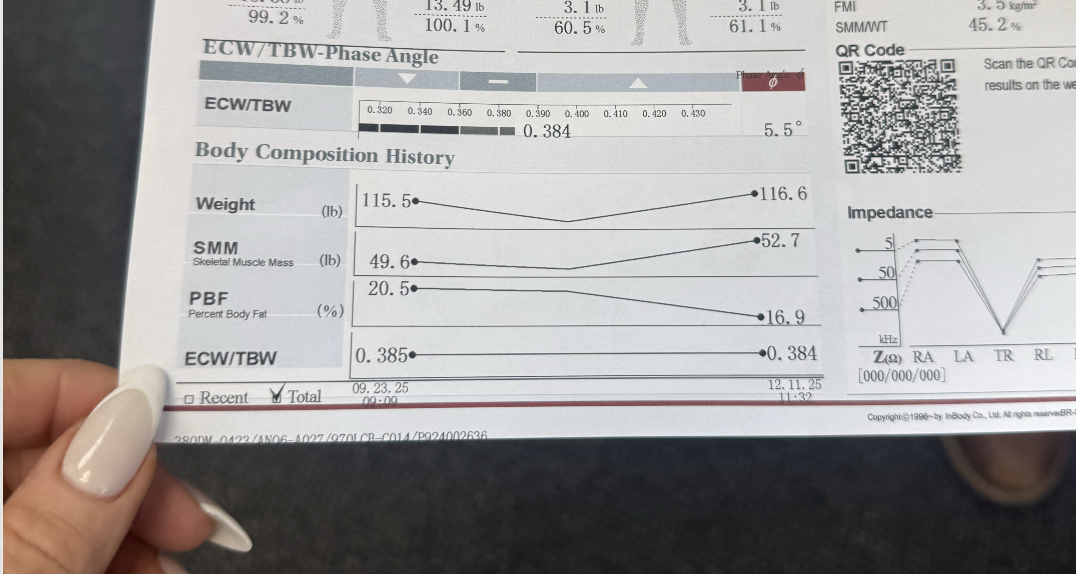
At the end of two months, I completed a DEXA scan in-office at The Gajer Practice.
Here’s what changed:
Body fat: 20.5% → 16.9%
Muscle mass: 49.6 lbs → 52.7 lbs
These shifts matter far beyond appearance.
Why This Is a Big Deal for Health
Increasing muscle mass and lowering body fat improves:
Insulin sensitivity
Resting metabolic rate
Hormonal stability
Bone density
Long-term disease risk
Muscle is metabolically active tissue—it helps regulate blood sugar, supports joint health, and protects against age-related decline. This is why metabolic health is the foundation of longevity.
“But My Weight Went Up…”
Yes—my scale weight increased by one pound. So did my water weight.
This is normal when muscle increases quickly:
Muscle stores glycogen
Glycogen binds to water
More muscle = more intracellular water
The scale alone tells an incomplete story. Body composition tells the truth.
Where I Am Now
The bloating has fully resolved (thankfully), and what remains is the part that matters most:
More energy
Greater strength
Improved metabolic resilience
A body that feels supported, not stressed
I didn’t go into peptides chasing a number or a look. I went in curious about what was possible when hormones, metabolism, and lifestyle were finally aligned.
And honestly?
The results exceeded my expectations.
Final Thought
Peptides are not magic—but when prescribed thoughtfully, paired with data, and supported by real lifestyle changes, they can be an incredibly powerful tool for women navigating midlife health.
As always: this is my personal experience, not medical advice. If you’re curious, work with a qualified provider who runs labs, monitors progress, and treats you, not trends.
More to come as this journey continues.